Crossed The Tiber

An Evangelical Converts to Catholicism

My Photo
Name: Tiber Jumper
Location: United States

I was born into the Catholic faith. At 14, I was "born again" and found Jesus personally but lost His Church. After thirty years, I have come to find that He has been there all the time. I am in love with Jesus and His Church. I am a part time geriatrician and internist and full time musician.

Thursday, November 30, 2006

Magnificat: A Canticle of Mary, A Lesson for Us


"My soul magnifies the Lord, And my spirit rejoices in God my Savior. For He has regarded the low estate of His handmaiden, For behold, henceforth all generations shall call me blessed. For He who is mighty has done great things for me, and holy is His name. And His mercy is on those who fear Him from generation to generation. He has shown strength with His arm: He has scattered the proud in the imagination of their hearts. He has put down the mighty from their thrones, and exalted those of low degree. He has filled the hungry with good things; and the rich He has sent empty away. He has helped His servant Israel, in remembrance of His mercy; As He spoke to our fathers, to Abraham and to His posterity forever."

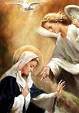
Mary rejoices in God her Savior upon receiving the news that the God of the universe will come to dwell in her and she will become the mother of God. Elizabeth later greets her and say "Who am I that the Mother of my Lord should come to me?" It's mind blowing just to think about!

This is the time of year when Christians should try to obey the scripture by calling her blessed. Catholics believe that we can and should call her blessed more often than just at Christmas. Mary is the model christian for all of us. She said: Let it be done to me according to thy word. Would that we all start our day with this prayer of submission to God.
(BTW, Catholics honor Mary, but don't worship her, That's reserved for God alone.)

"Our prayer should include the Mother of God . . . What the Hail Mary says is that all glory should be given to God, using these words: "Hail Mary, full of grace. The Lord is with thee; blessed art thou among women and blessed is the fruit of thy womb, Jesus Christ. Amen!" You see that these words are not concerned with prayer but purely with giving praise and honor . . . We can use the Hail Mary as a meditation in which we recite what grace God has given her. Second, we should add a wish that everyone may know and respect her . . . He who has no faith is advised to refrain from saying the Hail Mary."
Martin Luther

Preparing for Christmas, a Holy Season


"During holy seasons, finally, we ought to prepare ourselves carefully, to live holier lives, and to observe each rule more strictly, as though we were soon to receive from God the reward of our labors. If this end be deferred, let us believe that we are not well prepared and that we are not yet worthy of the great glory that shall in due time be revealed to us. Let us try, meanwhile, to prepare ourselves better for death. "Blessed is the servant," says Christ, "whom his master, when he cometh, shall find watching. Amen I say to you: he shall make him ruler over all his goods."

from the Imitation of Christ , Thomas a Kempis.

The complete work can be found by going to Calvin College Ethereal Christian Classics Website

Wednesday, November 29, 2006

XKINDLMARKT

"We don't understand why our sponsorship would be rejected for religious reasons, particularly considering the fact that our film details the story that inspired the holiday season that the Christkindlmarket was created to celebrate," New Line Cinema spokesman Robert Pini said in a statement.

Clips from a Hollywood movie about the Nativity aren't going to be shown at a Chicago Christkindlmarkt because of the possibility of offending some folks! Hollywood gets a taste of some of its own medicine here.

I think that the Chicago Plaza needs to change the name of their holiday festival to
Xkindlmarkt. I mean after all, people may get the wrong impression about the event with the name Christ in it. You would start to think it's like a religious holiday or something.

Tuesday, November 28, 2006

A Confession about the Islam Blog Below

Ok, Ok, So I confess about a little fib I told on my blog post regarding the Understanding of Islam from the Koran the other day. Turns out that the quote from Islamic apologist (Jaimete Wahabbi) was really a quote from Dr. James White, well known anti-Catholic Calvinist apologist. I just simply exchanged the words mosque for church and Koran for Bible and left the rest of the statement intact. Jaimete doesn’t exist except in my mind.

The actual quote was Dr. White’s definition of Sola Scriptura posted to my blog by a commenter trying to defend his particular interpretation of Sola Scriptura. I posted it as an object lesson to show the logic, or lack thereof, of using the Bible to authenticate itself. When you read the statement as if it was written about the Koran, I am sure most readers didn’t agree and accept that it was God’s word just because it says it. But when you read the original statement as if it was about the Bible, people don’t hesitate to say ‘Yeah the bible says it’s God’s word so it is.” The honest truth is that we all accept the Bible as God’s Word because a church 1700 years ago said it was. Whether we admit it or not it has become a permanent and not necessarily conscious part of a believer’s perspective regarding the Bible

In no way is my point to demean Scripture, for Catholics are the ones who originally told the world which Scriptures should be considered inerrant and infallible. I think one of my commenters got the mistaken impression that Catholics don’t read or respect Scripture. Let’s see what the Catechism says about Scripture. The Catechism is not the Word of God but is a reliable source of Catholic teaching and doctrine and pretty much everything you wanted to know but were afraid to ask…We don’t venerate the Catechism, but use it to gain knowledge about our Catholic faith and to deepen our relationship with our Savior.

"And such is the force and power of the Word of God that it can serve the Church as her support and vigor, and the children of the Church as strength for their faith, food for the soul, and a pure and lasting fount of spiritual life."109 Hence "access to Sacred Scripture ought to be open wide to the Christian faithful."110

"Therefore, the study of the sacred page should be the very soul of sacred theology. The ministry of the Word, too - pastoral preaching, catechetics and all forms of Christian instruction, among which the liturgical homily should hold pride of place - is healthily nourished and thrives in holiness through the Word of Scripture."111

The Church "forcefully and specifically exhorts all the Christian faithful. . . to learn the surpassing knowledge of Jesus Christ, by frequent reading of the divine Scriptures. Ignorance of the Scriptures is ignorance of Christ.112 (St Jerome 5th Century)

See My Post regarding Reformation Traffic

See my new Post about Christmas!

Room of Tears


When a new pope is elected, he steps into a small room to change into his new vestments before his makes his first appearance to the crowds. It is during this time that the enormity of the moment and the responsiblity of what has just happened dawns on them and they begin to weep. Hence the room is called The Room of Tears. These are the lyrics of a song on my last album describing the election of Pope Benedict. It can be heard by going to the CD Baby.com

Room of Tears

A plume of smoke, rises in the air
Was it white or black, it’s a bit unclear
But there’s thunder outside
As your heart pounds in your ears

The weight of the world, has fallen on you
It’s like a dream, but a little too true
It wasn’t in your plans
You’d have this job to do

You gaze up at the ceiling at the moment of truth
500 years have gone by and the sky is still blue
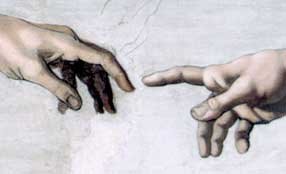
You see the hand of God
Is now pointing right at you


Chorus:
You’re in a room of tears
And they’ve closed the door
But there’s a litany of saints
Who’ve gone this way before (repeat)

They give you three pair of shoes, you try each one
One’s too big, the other’s just a bit snug
And only one pair
Fits just like a glove

A quiet retirement with some time to read
A little bit of Mozart was all you’d need
You never thought
You’d wear the Fisherman’s ring

You have a flock to feed, about a billion souls,
That’s a little bit of pressure from what you’ve been told
But there’ll be a bit more grace
When you sit on Peter’s throne

Chorus:
You’re in a room of tears
And they’ve closed the door
But there’s a litany of saints
Who’ve gone this way before (repeat)

A plume of smoke………

Pray For The Pope

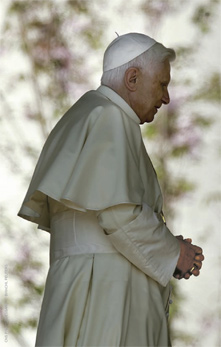
Today Pope Benedict began his visit to Turkey. Before his election in the conclave , he felt that his election would be "a guillotine."

As the trend in the ballots slowly made me realize that — in a manner of speaking, the guillotine would fall on me — I started to feel quite dizzy,” a smiling Benedict said, clearly joking. “I thought that I had done my life’s work and could now hope to live out my days in peace. I told the Lord with deep conviction, ’Don’t do this to me.”’

Let's pray that he won't experience martydom on this visit.
The reason that cardinals and popes wear the little red skull caps is to remind them of the price of martyrdom that was paid by many of those who had gone before them. The Catholic heirarchy live in the understanding that they can be called to give their lives for Christ as so many had done throughout the history of the Church. The first 6 or 7 popes were martyred for the faith during the Roman persecutions. Keep our Holy Father in your prayers that God's will be done on earth as it is in Heaven.

Monday, November 27, 2006

Understanding Islam Using The Koran, the Foundation of Truth?


Dr. Jaimete Wahabbi, noted Islamic apologist, issued a statement about the Koran when asked how does he know it is all one needs to understand Islamism.

"The Koran claims to be the sole and sufficient infallible rule of faith for the Islamic faith. The Scripture is in no need of any supplement; their authority comes from their nature as Allah-breathed revelation; their authority is not dependent upon man, mosque, or council. The Scriptures are self-consistent, self-interpreting, and self-authenticating. Islamic religion looks to the Scriptures as the only infallible and sufficient rule of faith, and Islam is always subject to the Word, and is constantly being reformed thereby."

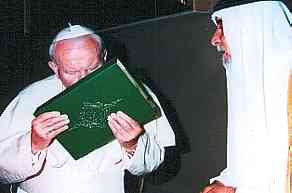
Well, if that's the case, what makes the Christian's Bible different than the Koran? or the book of Mormon? or any other book that "self authenticates?" Because a book claims to be it's own authentication and authoritative source of truth for spiritual life, does that mean it must be? Why is the Bible different than the Koran? Some Christians claim that the Bible is self-authenticating and not dependendent on any man, church or council. Are these folks any different than the fundamentalist Islamic quoted above?

Why do we believe the Christian's Bible is the Truth and the Koran not Truth, even though it is suggested that each gets its authority from God?
Hint: It has something to do with The Incarnation.

Any thoughts?

Sunday, November 26, 2006

Fishers of Men


Short video on the vocation to the priesthood.

Saturday, November 25, 2006

The Incarnational Gift That Keeps on Giving, The Catholic Church


Christianity is incarnational. As John stated "the Word became flesh and dwelt among us." Paul further elaborates on this theme in his letter to the Phillipians.
"Who, being in the form of God, thought it not robbery to be equal with God:
But made himself of no reputation, and took upon him the form of a servant, and was made in the likeness of men: And being found in fashion as a man, he humbled himself, and became obedient unto death, even the death of the cross."

Through salvation history God has shown us that He is incarnational. Since we as humans are made of this "stuff" called flesh, God uses the flesh and things of the earth to communicate His grace to us.
In direct opposition to Gnostic philosophy, we believe God created us and the things of earth, therefore the flesh is not evil but is good!

God came to earth in the flesh of a crying, wet and smelly baby. (Luke 2:7)
He uses water to wash away our sins through baptism (John 3:3-5 1Peter 3:21)
He uses the ears of men to hear our confession and the lips of man to offer us His absolution of our sins (John 20:23). (Matt 18:18)
He uses the elements of bread and wine to be changed into His body and blood. (John 6:53-57)
(Matt 26:26)
He uses the one-flesh union of a man and woman to confer the sacrament of marriage. (Matt 19:5-6)
He uses the laying on of hands to pass on His authority to men which began with Peter and apostles. (Matt 16:18-19)
He used sinful men to start a visible Church that the gates of hell would not prevail against.

As a Catholic, the belief in a church that is one, holy, catholic and apostolic is deeply rooted in this incarnational nature and activity of God. Once I was able to understand that God pours out His grace through the "stuff of earth," it became easier for me to accept that He has founded His church on men and continues to infuse His grace through this visible structure, made of..... dare I say, flesh.

Perhaps the reason that some rail against the organization and very visible structure of the Catholic Church is their inability to appreciate this overarching incarnational aspect of Christianity.
As a non-Catholic for many years, I was probably more aligned with a gnostic versus incarnational view of Christianity. I had believed that Christ started a church but thought it was invisible. I thought of it more as a spiritual entity vs. a physical, living, breathing and durable structure of laity, priests, bishops lead by Christ's vicar, the pope. The Catholic belief that Jesus started His Church on Peter and continues it through apostolic succession is a direct extension of this incarnational view of how God delivers His grace to and through man.

"Where the bishop appears, there let the people be, just as where Jesus Christ is, there is the Catholic Church." Ignatius of Antioch (student of St. John the Apostle), 107 A.D., Letter to the Smyrnaeans.

Friday, November 24, 2006

Lord Chancellor Death and The Hypocritical Oath


This article from Catholic World News is chilling:

"Lord Falconer, the Lord Chancellor of England, has warned doctors that they may face prison sentences if they refuse to starve and dehydrate patients to death. Criminal charges of assault could be laid against doctors or nurses who refuse to allow patients to die, even by removal of food and hydration tube. " The doctors who agree to this and support it must have taken the Hypocritical Oath instead of the Oath of Hippocrates!

I still remember the warm June day in 1985 at my medical school graduation held at the Garden State Arts Center in NJ when I took the
Hippocratic Oath along with 185 of my classmates who had just spent the last four years of our lives learning how to preserve and protect life.

"I will neither give a deadly drug to anybody who asked for it, nor will I make a suggestion to this effect. Similarly I will not give to a woman an abortive remedy. In purity and holiness I will guard my life and my art."

I can't remember now, but I suspect we took the "new and improved" modern oath which removed any references to not aborting babies as in the original oath! Thankfully, I am still reminded daily when I put on my white coat and stethscope, that I am in the business of saving lives, not ending them!

God have mercy on the folks in England who are promoting this stuff as well the people in Oregon who have already approved and practice physician-assisted suicide and euthanasia.

Also, for all the folks who want socialized medicine, don't think for a moment that health care cost containment isn't driving this . It's not about being humane and "ending suffering", it's all about saving bucks.

I am so thankful for the wisdom of The Church. Would that this truth could get into the hearts of lawmakers in our country before we get to the situation that British physicians are facing. Check out what the Catechism states regarding Euthanasia:


2276 Those whose lives are diminished or weakened deserve special respect. Sick or handicapped persons should be helped to lead lives as normal as possible.

2277 Whatever its motives and means, direct euthanasia consists in putting an end to the lives of handicapped, sick, or dying persons. It is morally unacceptable.

Thus an act or omission which, of itself or by intention, causes death in order to eliminate suffering constitutes a murder gravely contrary to the dignity of the human person and to the respect due to the living God, his Creator. The error of judgment into which one can fall in good faith does not change the nature of this murderous act, which must always be forbidden and excluded.

2278 Discontinuing medical procedures that are burdensome, dangerous, extraordinary, or disproportionate to the expected outcome can be legitimate; it is the refusal of "over-zealous" treatment. Here one does not will to cause death; one's inability to impede it is merely accepted. The decisions should be made by the patient if he is competent and able or, if not, by those legally entitled to act for the patient, whose reasonable will and legitimate interests must always be respected.

2279 Even if death is thought imminent, the ordinary care owed to a sick person cannot be legitimately interrupted. The use of painkillers to alleviate the sufferings of the dying, even at the risk of shortening their days, can be morally in conformity with human dignity if death is not willed as either an end or a means, but only foreseen and tolerated as inevitable Palliative care is a special form of disinterested charity. As such it should be encouraged.


Check out my previous postings regarding the Hippocratic Oath and St. Luke

Thursday, November 23, 2006

Happy Thanksgiving

The Catechism on Thanksgiving, The Eucharist

The Eucharist, the sacrament of our salvation accomplished by Christ on the cross, is also a sacrifice of praise in thanksgiving for the work of creation. In the Eucharistic sacrifice the whole of creation loved by God is presented to the Father through the death and the Resurrection of Christ. Through Christ the Church can offer the sacrifice of praise in thanksgiving for all that God has made good, beautiful, and just in creation and in humanity.

The Eucharist is a sacrifice of thanksgiving to the Father, a blessing by which the Church expresses her gratitude to God for all his benefits, for all that he has accomplished through creation, redemption, and sanctification. Eucharist means first of all "thanksgiving."

The Eucharist is also the sacrifice of praise by which the Church sings the glory of God in the name of all creation. This sacrifice of praise is possible only through Christ: he unites the faithful to his person, to his praise, and to his intercession, so that the sacrifice of praise to the Father is offered through Christ and with him, to be accepted in him.

Happy Thanksgiving to all my blogger friends and families! God is good and I thank Him for giving us all good things through Jesus Christ. Some of the folks who visit my blog don't agree with the theology presented here, but today we can all agree to be Thankful for the precious gift of Christ Jesus our Lord and Savior.

Wednesday, November 22, 2006

We All Need Saints (Heroes)


Catholic heroes are called saints. The process for recognizing one has become formalized over the past millenium but the path to becoming one remains the same: Lives of heroic faith lived for God and fidelity to the Church. I like to think of them as that great cloud of witnesses we are surrounded by. All Christians regardless of whether they are Catholic or not recognize the need for saints in their lives. Protestant Pastor John Piper says:

"The lives of our flawed Christian heroes are inspiring for two reasons: because they were flawed (like us) and because they were great (unlike us). Their flaws give us hope that maybe God could use us too. Their greatness inspires us to venture beyond the ordinary.

How does it come about that an ordinary person breaks out of the ruts of humdrum life to do something remarkable? It usually happens because of the inspiration of a man or woman they admire.

Do you have any heroes? Do you read about the lives of men and women who broke out of the mold and escaped the trap of the ordinary? Why not make a resolution now for the year 2000? - That you will read a biography. You have six weeks to plan this and choose the book. You can even put it on your Christmas wish list if you start thinking now. If you plan it, it is likely to happen. If you don't, it probably won't."

Not only do the heroes of our faith provide role models, Mary being the first among them, they also provide an added benefit too! They intercede for us. I suggest that you read Butler's volumes of The Lives of the Saints.

Catechism of the Church states:

"Being more closely united to Christ, those who dwell in heaven fix the whole Church more firmly in holiness. . . . They do not cease to intercede with the Father for us, as they proffer the merits which they acquired on earth through the one mediator between God and men, Christ Jesus. . . . So by their fraternal concern is our weakness greatly helped."

St. Terese of Lisieux said this before she died:

Do not weep, for I shall be more useful to you after my death and I shall help you then more effectively than during my life.
I want to spend my heaven in doing good on earth.
St. Terese, pray that I will begin to have a heart for God as you did. Pray that I can love Jesus the way you do.

Tuesday, November 21, 2006

I Don't Want a "Lampstandectomy"


In Mass yesterday, the priest read from Revelation.

I heard the Lord saying to me:“To the angel of the Church in Ephesus, write this:“‘The one who holds the seven stars in his right hand and walks in the midst of the seven gold lampstands says this:“I know your works, your labor, and your endurance, and that you cannot tolerate the wicked; you have tested those who call themselves Apostles but are not, and discovered that they are impostors. Moreover, you have endurance and have suffered for my name, and you have not grown weary. Yet I hold this against you: you have lost the love you had at first. Realize how far you have fallen. Repent, and do the works you did at first. Otherwise, I will come to you and remove your lampstand from its place, unless you repent.

I haven't read that verse in a few years and last night I was struck by the reality that Christ was telling me;
1) I need to keep my love for Him fresh and new.
2) I need to be aware of how far I have fallen from that grace.
3) I need to repent.
4) I need to do the works, continue to labor and endure
5)If I don't do these things, He will come and remove my lampstand.

Now with my "Once Saved Always Saved" colored- glasses removed, the Sacred Scripture was telling me I needed to repent, stay in love with Jesus and endure to the end or I would undergo a painful procedure called a lampstandectomy!

Thankfully, Jesus doesn't leave us on our own and powerless to do these works.
He sends us His Holy Spirit and gives us the grace to repent and indeed much grace is poured out in the Sacrament of the Altar and Reconciliation.

My Soul Magnifies the Lord (One More Time!)


In my first week of New Testament Greek class at college, I met a nice fellow who became a close Christian brother to me. He was born prematurely and a medical mishap led to near total blindness but he never let his disability discourage him. In college, we both attended Intervarsity Christian fellowship meetings together as well as a Bible study led by a Greek professor from Lehigh University who read straight from the Greek New Testament. I found out my good friend also went to Saturday Vigil Mass and was Catholic! Later, after going to Harvard for his Master's degree, my friend became a Catholic priest.

I wanted to post his reflections on Mary since many protestants and some converts struggle with Mary's role in our life of faith. We Catholics like to call her the Blessed Mother in order to obey Scripture when it says that "All Generations shall call me Blessed." To redundantly reiterate one more time, we don't worship Mary. Only God gets our worship.


My Soul Magnifies the Lord

by

Father Bernard J. Ezaki

Being a legally blind priest does indeed have its drawbacks. For one thing, I cannot read most printed material without the aid of a magnifying glass. This includes even the Liturgy of the Hours--the continual cycle of Psalms, Scripture readings, and prayers that the clergy and religious are obliged to pray at various times during each day. Often I find using a magnifier somewhat frustrating, to say the least. Why can’t I just read the Psalms like everyone else, without this stupid lens? Why can’t I get at the Scriptures and prayers directly? Why must this thing, which is nothing more than a clear piece of glass, stand in my way?

The answers, of course, are obvious even as I raise the questions. My trusty magnifying glass is only a clear bit of matter, of much less importance than the Psalms I happen to be reading. Take away the glass, however, and I am helpless in getting at the Psalms. It is my blindness, not the magnifier, that presents the real problem. I ought to be grateful for the lens, because it brings into clear focus what would otherwise be beyond me. The Psalms are ultimately more important than my magnifying glass, but in my approach to the Psalms, the glass must come first. The lens must stand immediately before my eye if I am to have access to the words. This is a fact of life brought about by my own inability to see.

It is a strange fact that we Catholics today often feel the same kind of frustration about praying to Mary as I do about using a magnifying glass. We ask: Why does Mary have to come between Jesus and me? Why can’t I go directly to Our Lord without resorting to Our Lady? Mary is, after all, only a creature, albeit a sinless one. So why must this Third Party interpose herself between Christ and me?

Yet if we regard sin as a kind of partial blindness and Mary as a kind of magnifying glass, I think the answers are pretty obvious. Yes, Mary is a created being, in no way comparable to the infinite majesty of her divine Son; but take her away, and we have no hope of seeing Jesus clearly. Just as my little lens enlarges the printed Word, allowing me to grasp the meaning of the sacred text, so Mary our Magnifier reveals Christ, the Word of God, to us who have been partially blinded by sin. It is not a matter of going to Mary versus going directly to Jesus. Going to Mary is going directly to Jesus. That’s why the saints refer to Mary as the Mediatrix of all graces. That’s why the Church constantly asks her to “show unto us the blessed fruit of thy womb.” That’s why Mary herself declares, “My soul magnifies the Lord” (Luke 1:46). Mary is not the problem. Our sinfulness is the problem, and she is the answer. She is the one who brings Our Lord into sharp clarity for us. Thanks be to God! A friend of mine who owns a transparent glass statue of Our Lady put the matter quite simply: “I like that statue,” she said, “because when I look at it, I see clear through to Jesus.”

Make no mistake. The dignity of Christ surpasses that of Mary in every way. The Word of God comes before Mary in time and eternity, in majesty and holiness. Yet as we approach the Divine, Mary the Magnifier must intervene and come before the Word. Mary’s priority is not a priority of dignity but of proximity. She must stand immediately before us if we are to focus in on her Son. This is a fact of life brought about by the presbyopia of sin.

Believe it or not, sometimes I am so caught up in reading the Psalms in my breviary that I actually forget that I am using a magnifying glass! Does this mean that the magnifier is no longer assisting me? Of course not! My lens comes to my aid even if I fail to be aware of its help. This, I believe, is like the situation of Protestant Christians who do not pay as much attention to Mary as we Catholics do. They are so caught up in Jesus, the Word of God, that they fail to realize how much Our Lady is helping them. Does this mean that the Magnifier is no longer assisting them? Of course not! Mary comes to the aid of her children even if we are unaware of her help. The bride and groom at Cana’s marriage feast obviously knew nothing of Mary’s intercession with her Son on their behalf (John 2:1-12). Who knows how much our Mother pleads for us before Christ without our ever realizing it?

A magnifying glass does more than enlarge the printed word. It can also focus a beam of sunlight in such a way as to ignite a lifeless leaf.

Come, then, O Virgin Mother, clearest of souls, and direct the light of your Son into our withered hearts. Set us ablaze with the fire of His love. Amen
Monday, November 20, 2006

Young Catholics Embrace the Sacraments

Last evening my wife and I had the opportunity to share the story of our conversion with a gathering of Catholic youth groups in our diocese. The evening started with praise and worship lead by a team of musicians playing contemporary worship hymns. We then spoke to the group about the joy of returning to the Church we left so many years ago.

We emphasized the role of the Eucharist in our lives and how as young Catholics they have the sacraments of Eucharist and Reconciliation to empower them to stay on-fire for Jesus. The talk was followed by Eucharistic Adoration during which priests were available for the Sacrament of Reconciliation. During adoration, many of the youth were on their knees with hands raised towards the Blessed Sacrament. It was heartwarming to see the confessional lines with 10-15 kids in line at both confessionals! It made me realize these young Catholic students understand and appreciate their faith and will Lord willing, be the generation of Catholics to “turn the tide.”

After my talk, a young adult running the soundboard for the event told me he enjoyed the talk and was not a Catholic. He said he appreciated the things I said and was not offended at my clear “pizza box” message: “I’ve tried the rest, now I have found the Best.”

I was hoping to impress on them the treasure they have in their Catholic faith . I think they already knew.

At The Cross Where My Dear Savior Died


A popular hymn written by Isaac Watts a few centuries ago is a beautiful reminder of the place where it all begins for us Christians-the Cross of Christ.

Alas, and did my Savior bleed, And did my Sov'reign die?
Would He devote that sacred head
For such a worm as I?
At the cross, at the cross Where I first saw the light,

And the burden of my heart rolled away
It was there by faith I received my sight,
And now I am happy all the day!

Not only does the Cross bring us great joy but also compels and empowers us to exhibit the fruits of a changed life. I like what Recon wrote on her blog:

"We must go to the foot of the cross. We have to walk the road to Calvary as did our Lord. We look up and see His holy, bloody feet and having carried our cross there, with our shame, pain, guilt, sin, joy we lay it all down. We take our ALL to him and lay ourselves at his feet in sacrifice so that we can then go out to our world and lay our lives down for our friends and our enemies."

It was the depiction of the Cross in Mel Gibson's The Passion of the Christ that led me to give up my reticience and pre-conceptions regarding Catholicism and return to the Church. I suddenly saw my pride and willfulness in struggling against His Church for so many years, in light of the all-sufficient sacrifice He provided for me. During the terrible scourging on the way to Calvary I said, "Jesus you did this for me, I will do anything for you, even become Catholic!" In my heart of hearts I had begun to realize that Catholicism was true and the graphic depiction of His suffering for me convinced me I had to let it all go.

I have since found out that other converts and reverts to Catholicism were similarly affected by this sacred art, The Passion of the Christ.

Wiki B-Day Meme

St. Jimbob of the Apocalypse tagged me with this:

Wiki B-Day Meme

Three events:
1922 Formation of the USSR
1953 First Color TV sold in US for $1,175
1972 US halts heavy bombing in Vietnam
Two Birthdays:
John Hartford 1937-2001 Tugboat captain and folk musician extraordinaire. One of my inspirations as a young musician. Wrote "Gentle on My Mind" made famous by Glenn Campbell. The song broke all rules of songwriting with no chorus , just one verse after another!
Died of lymphoma. Perhaps one of the best banjo players in the world.
Noel Paul Stookey 1937 (Peter Paul and Mary) Wrote the infamous "Wedding Song"
Had a conversion experience to Christianity in the late 70's.
One Death: 1519 -1591 Pope Innocent IX Was present at the Council of Trent . His pontificate lasted two months.
One Holiday: 6th Day of Christmas (I love the way Catholicism keeps the beauty and wonder of this HolyDay well into January!)


Rules:1) Go to Wikipedia
2) In the search box, type your birth month and day but not the year.
3) List three events that happened on your birthday
4) List two important birthdays and one death
5) One holiday or observance (if any)

I tag "La Vie Catholique"

Friday, November 17, 2006

License to Sin One More Time

I loved this comment from Onion Boy of the Luminous Miseries. He is a former evangelical pastor who Crossed the Tiber recently.

"Misinterpretation and situational justification is easy when we are left to interpret things on our own and make up the rules according to the misshapen pattern of our own hearts, ever inclined toward sin. ..... Am I glad that there is a Church that has helped bring understanding and set moral and faith standards and been faithful to deliver the sacraments? Oh yes, oh yes, oh yes. "

I too have experienced the damage done when I chose to "make up my own rules according to the misshapen pattern of my own heart."

Catholics talk about having a well-formed conscience. Sin is deceptive and many of us, due to a mistaken sense of "freedom in Christ", become enslaved to sin. As the book of Jude states, sadly we can use our grace and freedom as a license to sin.

Some thoughts from The Catholic Catechism on Conscience:

Ignorance of Christ and his Gospel, bad example given by others, enslavement to one's passions, assertion of a mistaken notion of autonomy of conscience, rejection of the Church's authority and her teaching, lack of conversion and of charity: these can be at the source of errors of judgment in moral conduct.

A good and pure conscience is enlightened by true faith, for charity proceeds at the same time "from a pure heart and a good conscience and sincere faith."

The more a correct conscience prevails, the more do persons and groups turn aside from blind choice and try to be guided by objective standards of moral conduct.

Thursday, November 16, 2006

JR TOLKIEN LOVED THE EUCHARIST


"I fell in love with the Blessed Sacrament from the beginning and by the mercy of God never have fallen out again."

J.R.R. Tolkien

(He, along with the writings of GK Chesterton was instrumental in the conversion of CS Lewis)


"Tolkien acknowledged that his Catholic sensibilities unconsciously inspired characters and objects in his imaginative world. In a 1952 letter to Rev. Robert Murray (grandson of the founder of the Oxford English Dictionary and a family friend), he readily admitted that the Virgin Mary forms the basis for all of his "small perception of beauty both in majesty and simplicity." It is not surprising, he admits, that the character of Galadriel—a created being endowed with radiant beauty, impeccable virtue, and powers of healing—resonates with the character of our Blessed Mother.
Nor could Tolkien deny that the Holy Eucharist appears in The Lord of the Rings as the waybread (lembas), given by the elves to the hobbits to eat on their journey. The lembas reinforces the hobbits’ wills and provides them with physical sustenance in the dark and barren lands on the way to Mount Doom. As the Church teaches, while the Eucharist still tastes and looks like bread and wine, our sensations shroud a deeper mystery: The Eucharist is truly Christ’s body and blood. So in The Lord of the Rings the Blessed Virgin Mary and the Eucharist appear shrouded in the mysterious elements of Middle-earth. The best way to understand this is to see such examples of Catholic symbolism as literary "accidents." To leave them out would have diminished the story; they are parts of Tolkien’s effort to make his world complete, true for all times and places" (Jason Bofetti, Crisis Magazine 2001)

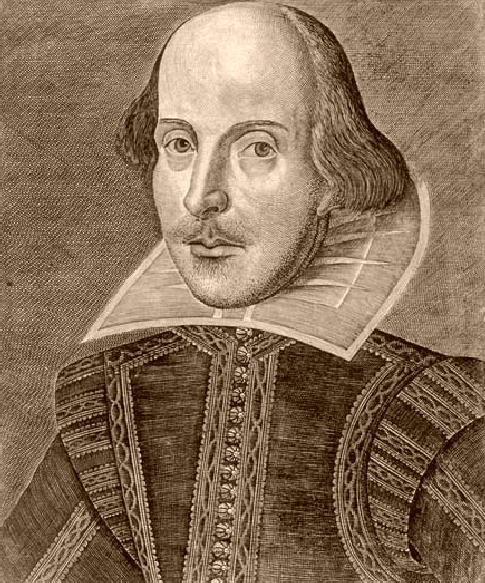
Sola Shakespeara


I found this very interesting comment on Dave Hartline's blog. This simple analogy beats most apologetic arguments I have read regarding sola scriptura!

Julie writes:

"Another thing I have never been able to understand about the Protestant line of thought is, why IS it OK for me to interpret the Bible however I want, so long as it is not Catholic teaching? I can be an authority, but not the Church. It's like in Shakespeare class, I was always glad when the instructor explained things to us, because, well, she had years of study, and I didn't, and she knew background that I didn't. If she would have said: "You are on your own. It is 'Shakespeare alone', " I probably would have flunked the class. "

Yes my friends, using Sola Shakespeara may cause you to flunk the class!

Freedom in Christ, Not License to Sin

Regarding Catholic Guilt, a commenter posted about her inability to sometimes know what was sin because in her previous denomination she was told to consult the Bible because all the "answers are in there." Well, as it turns out, many of the specific answers aren't there. As Catholics we are thankful for the Sacred Tradition of the Church and the Magisterium to guide us when the waters get murky. I have been so amazed at the way in which the Catechism deals with issues that were couldn't possibly be answered with just a "plain reading" of scripture. I am not denigrating scripture here since Catholics believe it is God's word, but nowhere does scripture say it is the last and only word regarding faith and morals. (This concept has been discussed in previous posts)
I use to pride myself on the ability to "embrace the tension between modern culture and biblical christianity." Unfortunately, this sometimes led to embracing the modern culture a bit too tightly! Meaning, with no clear-cut guidelines on certain aspects of morality, a person can fall into sin believing they are "free in Christ" but actually become enslaved to sin and not be free at all. Did my "freedom in Christ" really benefit me when I took no serious thought to what movies I rented containing vile language or graphic sexuality and violence because the "story was relevant" and they were only rated R?
Wasn't I committing fairly significant sin when I later replayed those graphic scenes through the flash memory in my mind? (I think Jesus referred to it as adultery) This soon becomes a slippery slope for some of us as the Catechism says:

Sin creates a proclivity to sin; it engenders vice by repetition of the same acts. This results in perverse inclinations which cloud conscience and corrupt the concrete judgment of good and evil. Thus sin tends to reproduce itself and reinforce itself, but it cannot destroy the moral sense at its root.

The Church is not legalistic, but helps to show us the damage that sin can do to us as Christians. I believe my Catholicism has helped me to better hear Jesus' call for a life spent in attempting to be holy for He is holy. At some point in my previous life, I gave up on that possibility thinking, I can never be holy so "this is all you're gonna' get from me God." I have benefited greatly from reading the lives of the saints who struggled as we do and yet came out victorious and satisfied in their hunger and thirst for righteousness.

Have any of you other convert/reverts experienced more conviction of sin and desire for holiness since converting? It would be interesting to see your thoughts.

Catholic Guilt Part 2


Since I have been Catholic for two and a half years, I haven't actually seen Catholic guilt among the Catholics I run into. It must exist mostly for those ex-Catholics who still feel remorse over leaving and/or choosing a path that is contrary to Christian values. I have spent some time with the religious brothers of the Franciscan Friars of the Renewal and was impressed with their sense of joy and adventure. The best explanation of the sacrament of reconciliation (confession) I ever heard was from one of these brothers. He explained that he thinks of it as "speaking into the ear of God." I try to remember that when I approach the confessional with some apprehension at times.
Apprehensive because I'm feeling guilty, no! It's just darn humbling sometimes to confess with our lips the dark thoughts of our heart and stupid things we sometimes do as Christians. But sense of joy that results afterwards as well as the "I know that I know" I have been forgiven is worth the sometimes apprehensive wait in the unfortunately short lines to confession.

Wednesday, November 15, 2006

Catholic Guilt


I was playing a musical engagement recently and between songs told the story of how I acquired a 35 year old Martin Brazilian rosewood guitar. I shared with them how I felt a little guilt for the amazingly low price I paid. Someone from the audience piped up and said “Catholic eh?”

So on the way home from the gig I started to think about this idea of Catholic Guilt and my conclusion is that I am proud of Catholic Guilt!

I never hear of non-denominational Christian guilt, but often hear of Catholic Guilt. Perhaps because Catholicism has moral standards that have been quite codified and turning away from these precepts causes a sense of guilt or shame? Alas, that’s a good thing if that guilt draws our hearts in repentance back to Christ. The Bible calls that godly sorrow.

In our present culture, there is a wholesale attempt to abolish the concept of sin. Sadly, in many churches, what used to be called sin is no longer sin. For example, abortion and same-sex unions had been considered grave sin in every Christian denomination up until 30 years ago. Now there are major Christian denominations in the US (as well as dissident Catholics) seeking to promote and legalize these sins.

Returning to Catholicism hasn’t made me feel guiltier, but has enhanced my desire to please God and increased my awareness of the sins in my life that keep me from Him. I am not scrupulous and any religion wrongly taught could lead to that. Quite honestly, I have been freer in mind and spirit since receiving the sacraments of reconciliation and Eucharist than I have been for 30 years before my reversion to the Church. I am thankful that I feel guilt when I sin because I trust that it is the Holy Spirit that is pointing me back to Him and convicting me of wrong doing. We should allow guilt which is godly sorry to always lead us to repentance. The Catholics have a spiritual exercise called an examination of conscience which allows the Holy Spirit to search our hearts and illuminate any areas of sin which hold us back from experiencing the grace of God more fully in our lives. So when I hear “Catholic Guilt,” I think two things:

To me it points to the fact that Catholicism still stands for unchanging truth and right living according to God’s moral standard. A sense of guilt comes from walking in disobedience.

Christ’s death on the cross was for our sin and shame and He continues to apply His shed blood through the sacrament of reconciliation. He gives me the anti-dote for guilt through sacramental confession.

Jn 20:21-23
21
He said therefore to them again: Peace be to you. As the Father hath sent me, I also send you.
22 When he had said this, he breathed on them; and he said to them: Receive ye the Holy Ghost.
23 Whose sins you shall forgive, they are forgiven them; and whose sins you shall retain, they are retained.

PS: I feel a little guilty for being proud of Catholic Guilt......just kiddin'

Seeker's Group Last Night


The Seekers meeting was small but went very well. Thanks for the prayers. It was attended by only one non-Catholic woman but the meeting went for over three hours!

We were also joined by a graduate of Moody Bible Institute who crossed the Tiber in seminary and has been a diocesan priest for the past twenty or so years. I did not expect Father R. to attend but he was on our mailing list so I was very pleased and grateful when he showed up. He drove from another county to come to the meeting.

Our planned discussion was on faith and works but we also discussed baptism, confession, the Eucharist, “once saved always saved”, where the Bible came from, apostolic succession etc.

Father R. listened through much of the discussion as I explained to our guest the Catholic perspective on Faith and Works. She was surprisingly on-board with Catholic views! She is from a church that is an off-shoot of John Wesley's church and therefore has similar views as Catholics regarding holiness and the ability to lose one's salvation.

Regarding infant baptism that she questioned, Father R. gave a most eloquent discussion of how and why Catholics baptize infants beautifully tying in the concept of God’s grace. Babies can’t do anything to earn this free gift!

Our non-Catholic friend was very surprised to know that Catholics “love the Lord” just like she and her church folks do. She had experienced so many Catholics in her life that didn’t live their faith and had thus come to the conclusion, as many do, that Catholics aren’t “saved.” She readily admitted though that there were many people in her denomination that didn’t live obedient lives as well.

At one point, our non-Catholic guest remarked that she was not going to convert. We reassured her that we did not expect her to but were happy that she was interested in learning what Catholics really believed. She said that there is much anti-Catholic rhetoric in her church and now she will have some information to share when people repeat false perceptions about Catholici